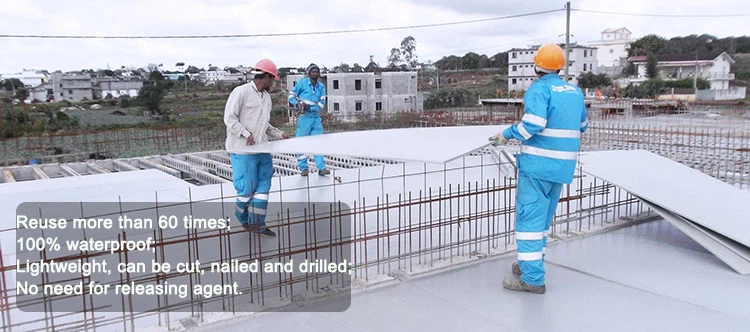
Steps in using plastic formwork in concrete construction works
Now that we’ve discussed why we need formwork and the benefits of using it, it’s time to understand its usage. Let’s look at the main steps involved in using plastic formwork in concrete construction.
The procedure for using plastic formwork for construction involves 3 main phases.
Obtaining the plastic formwork as per your construction requirements
Preparing the construction site to build the formwork
Applying the concrete into the fixtures Obtaining the plastic formwork
Depending on your construction type, obtain the plastic formwork from your supplier in the size and shape
Once the cargo is delivered, double-check the dimensions and quality of the formwork before
Prepare the construction site
Excavate the construction site to ensure there is no debris, water, or other contaminants that might affect the
Using a measuring tape, measure and specify the corners where the concrete structures need to be You can also use strings to mark the borders to get a three-dimensional picture of the site.
Use the plastic formwork pieces along the previously marked areas to build the framework for the Use the strings as a guide to place the plastic formwork.
Adjust the grooves on the formwork pieces and fit them together, ensuring there are no spaces in
Add reinforcements with additional plastic pieces to help support the entire formwork Apply the concrete
Mix the concrete according to the pre-specified ratio of water and
Begin pouring the concrete into the plastic formwork structure, starting from the side farthest from
Even out the poured concrete using a screen rod that is longer than the formwork
Remove excess concrete after smoothing down the area and ensuring there are no holes or
These are the broad steps involved in using plastic formwork in concrete construction. Let’s now look at an example of using plastic formwork to build a specific component of a building.
Example of a plastic formwork system
Let’s describe an example of how to use plastic formwork in concrete construction. The construction for this example is the walls of a regular housing structure. The plastic formwork is in the form of square plastic pieces that can be connected together using grooves. Here’s the procedure that’s followed.
The wall panels for the house are put together using the plastic formwork pieces, after which the infrastructure is put in
Conduits, steel bars or reinforcement, pipes, door frames, window frames, and other such fittings are positioned onto the plastic
Once done, the fittings are reinforced into place using a second set of plastic panels. There is now a cavity between the two sets of wall
Lightweight concrete is now poured into the opening until it fills up every available space
The mortar is then left to dry and set The panels of the plastic formwork are then individually removed from the structure.
The house walls are sturdy and ready for the remaining construction
It’s as simple as that! The removed plastic formwork parts are cleaned with water and reassembled for use on the next project. The use of plastic formworks allows for almost zero wastage and high reusability. Transporting the pieces is also very easy owing to their light-weight and flexible nature.
Actual reviews have shown that plastic formwork can be reused for up to 50 houses. This is a huge benefit in terms of cost-reduction on getting new material each time.
Additionally, the plastic need not be disposed of after 50 uses. It can instead be recycled and converted into household items like toilet seats and other plastic fittings. It’s no wonder, therefore, that construction businesses around the globe are leaning more towards the use of plastic formworks.