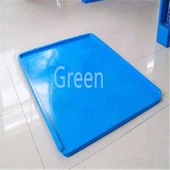
Why do construction businesses need Plastic Formworks?
Any construction requires the creation of strengthened, cast-in-place concrete structures using viable options to keep it sturdy and stable. Formwork helps quicken this process and allows the concrete structures to be set into place easily. Identifying the right kind of formwork to use for each construction type is a crucial step in this process. This is where a plastic formwork system makes the choice easy and reliable.
Let’s first look at some of the features that the ideal formwork should have.
Good quality formwork needs to be strong and highly durable in order to handle varied loads like movable parts and deadweight. w”
The formwork should provide for flexibility in creating desired shapes or At the same time, it needs a certain rigidity to retain its shape once the concrete is poured.
All joints, grooves, and connectors of formwork must be leakage-proof. Leaking concrete is one of the worst situations to be in on a construction
The formwork should not react to elements like water, rust, heat, and other corrosives that can cause damages. +“
The formwork needs to be light enough to manage on the This would also make it easy to transport and store when required. +“
The components of formwork should be versatile enough to be able to make adjustments when
These are some of the main features that any ideal formwork material should possess in order to be successful. Coming to the reason construction businesses need a plastics formwork system — it meets almost all of these criteria, and more!
Every formwork type has its own set of pOSÍtives and negatives. As part of our evaluation of plastic formwork, we’ve listed these down to give you a better idea of the plastic formwork system.
Positives of using a Plastic Formwork System
Here are some of the unique reasons why plastic formwork has become the sought-after material in construction.
No limitations on size — plastic formworks are capable of being moulded into the smallest and largest sizes as
Unlimited shape and pattern options — in a plastic formwork system, the components can be shaped into unique patterns that aren’t possible with other formwork
Top-quality finishing — plastic formworks allow for superior quality finishing with the least amount of surface, since they do not stick to the
Economical — plastic formworks can be reused over 100 times more than other formwork Which makes is it an extremely cost-effective option for construction ” businesses.
Light-weight — the plastic material is a light-weight product that makes for easy handling and transportation.
Ease-of-use — plastic formworks can be easily handled by an unskilled workforce This eliminates the need to hire trained, expensive
A sample plastic formwork system in action
With the advantages and disadvantages of plastic formworks detailed above, let’s now understand the use of a plastic formwork system. Below is an example of how a plastic formwork system works when building the walls of a house.
The plastic formwork system used for this example is in the form of square plastic structures with grooves to connect them together.
Step 1 — the panels for the wall are connected as needed in the specification by fitting the square pieces together.
Step 2 — components such as the doors and windows, pipes, conduits, and reinforcement steels are placed within the plastic framework.
Step 3 — the components are held in place by reinforcing it with a second layer of the formwork squares over the first. This forms an opening between the two layers.
Step 4 — the mixed concrete is added into the opening to fill up all the space inside. Step 5 — the structure is left as is overnight for it to set and dry completely.
Step 6 — once the concrete has dried, the individual square pieces are removed from the framework.
And that’s it! The walls of the house are ready. Using a plastic formwork system is the easiest and quickest method in almost all types of construction today. What makes it even better is the ease with which these blocks can be reused. The removed pieces are simply washed with a spray of water and moved on to the next project.