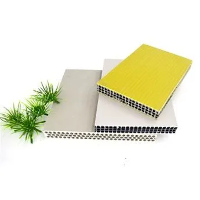
Why Is PVC Foam Board a Good Choice for Wet and Humid Environments?
When selecting a sheet material for bathrooms, kitchens, advertising displays, interior partitions, or other humid environments, moisture resistance is an important consideration. Traditional wood-based boards can absorb moisture, swell, or deform when they are exposed to water for a long period of time.
PVC Foam Board is increasingly used in these applications because of its low water absorption and moisture-resistant structure. But what makes PVC Foam Board suitable for humid environments, and where can it be used?
1. How Does PVC Foam Board Perform in Humid Conditions?
The main advantage of PVC Foam Board in humid environments is its resistance to moisture.
PVC foam board is made from polyvinyl chloride with a closed-cell foam structure. Compared with many traditional wood-based materials, the material does not easily absorb water. This helps reduce problems such as swelling, rotting, and deformation caused by prolonged exposure to moisture.
For applications where the board may frequently come into contact with humidity or occasional water, this property can make PVC Foam Board a practical alternative to conventional wood panels.
However, waterproof performance also depends on the complete construction system. Edges, joints, holes, screws, and surface treatments should be properly handled when the application requires strong water resistance.
2. Why Is Moisture Resistance Important for Furniture?
Furniture used in kitchens, bathrooms, laundry areas, and other humid locations often faces a challenging environment.
Water vapor and accidental water exposure can gradually affect wood-based panels. Over time, repeated moisture exposure may cause swelling or deterioration.
PVC Foam Board can be used for:
* Bathroom cabinets
* Kitchen cabinets
* Shelving
* Storage cabinets
* Interior partitions
* Wall panels
* Decorative panels
* Furniture components
For cabinet manufacturing, another advantage is that PVC Foam Board can be cut, drilled, screwed, and processed using common woodworking equipment.
This makes it easier for manufacturers to produce customized furniture components according to different dimensions.
3. Is PVC Foam Board Suitable for Bathroom Applications?
Yes, PVC Foam Board can be considered for many bathroom applications because moisture resistance is one of its important material characteristics.
Bathroom furniture may be exposed to water vapor, splashes, and frequent changes in humidity. A board with good moisture resistance can help improve the service life of the finished product compared with materials that readily absorb water.
PVC Foam Board can be used to manufacture bathroom cabinet bodies, shelves, decorative panels, and other components.
For projects requiring a higher level of water resistance, manufacturers should also pay attention to edge sealing, hardware installation, joints, and surface finishing.
4. Lightweight but Easy to Process
Water resistance is not the only reason to consider PVC Foam Board.
Another important characteristic is its relatively low weight compared with many solid plastic or wood-based panels.
At the same time, PVC Foam Board can be processed through cutting, drilling, sawing, bending, printing, and other fabrication methods depending on the specific board type and application.
This combination of lightweight construction and easy processing is useful for advertising, furniture, interior decoration, and display manufacturing.
5. PVC Foam Board for Advertising and Signage
PVC Foam Board is also widely used in advertising and display applications.
The smooth and relatively uniform surface makes it suitable for printing, mounting, lettering, signage, display boards, and promotional structures.
Outdoor or semi-outdoor advertising applications may benefit from its moisture resistance, especially when the board is exposed to humid conditions.
The actual outdoor service life will depend on the board formulation, thickness, surface treatment, printing method, installation environment, and exposure to sunlight.
6. What Thickness Should You Choose?
The appropriate thickness depends on the application.
Thinner PVC Foam Board can be suitable for advertising signs, printing, displays, and decorative applications where weight reduction is important.
Medium and thicker boards can be considered for furniture, partitions, shelves, cabinet components, and applications requiring greater rigidity.
When selecting a board, buyers should consider:
* Thickness
* Density
* Board size
* Surface finish
* Color
* Mechanical requirements
* Processing method
* Installation environment
For large-volume projects, it is also important to confirm dimensional tolerances and consistency between different production batches.
7. PVC Foam Board vs. Wood-Based Panels in Humid Areas
The biggest difference is moisture behavior.
Wood-based panels can absorb moisture, while PVC Foam Board has much lower water absorption and is not prone to biological deterioration in the same way as untreated wood.
This does not mean PVC Foam Board is suitable for every application. Structural requirements, temperature, chemical exposure, fire requirements, and installation conditions should all be considered.
For applications where moisture resistance is a major requirement, however, PVC Foam Board provides a practical material option.
Conclusion
The key reason PVC Foam Board is suitable for many wet and humid applications is its moisture-resistant structure.
From bathroom cabinets and kitchen furniture to advertising boards, partitions, and decorative panels, PVC Foam Board combines moisture resistance with low weight and relatively easy processing.
For manufacturers and distributors, choosing the correct thickness, density, surface finish, and formulation is essential to achieve the desired performance in the final application.