

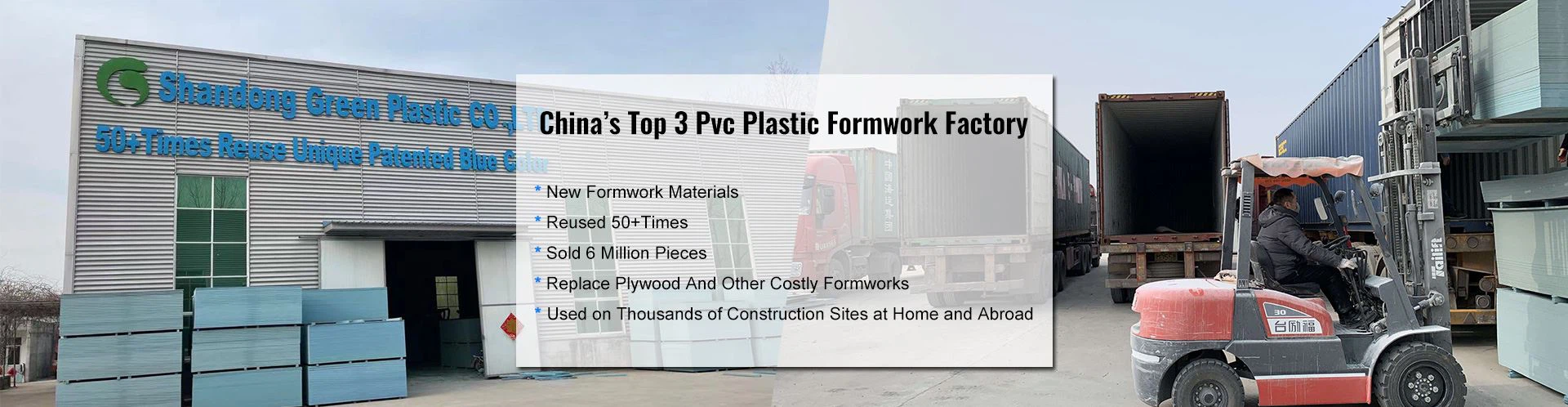


How to Make Concrete Formwork: A Guide to PVC Building Formwork
Concrete formwork plays an important role in construction by holding freshly placed concrete in the required shape until it can support itself. The choice of formwork material affects installation, concrete surface quality, handling, maintenance, and overall project costs.
Traditional timber and plywood remain common options, but reusable plastic formwork panels are also used in selected construction applications. PVC building formwork is one option for contractors looking for lightweight panels that can be handled, cleaned, and reused under suitable conditions.
This guide explains the basic process of preparing concrete formwork and the factors to consider when using PVC formwork panels.
1. Understand the Concrete Formwork Requirements
Before making concrete formwork, determine the dimensions and shape of the concrete element. Walls, columns, beams, and other structural components have different formwork requirements.
The planning stage should consider:
* Concrete element dimensions and geometry
* Expected fresh-concrete pressure
* Panel thickness and stiffness
* Support spacing and bracing arrangements
* Connections, joints, and fastening methods
* Concrete placement and stripping procedures
The formwork system must be designed to withstand the loads generated during concrete placement and vibration. Panel selection should therefore be based on verified technical data and the requirements of the complete formwork system, not on material type alone.
2. Select Suitable Formwork Panels
The next step is choosing a formwork material that matches the project requirements.
Timber and plywood are widely used because they can be cut and assembled on site. Metal systems are commonly selected for projects that require engineered components and repeated use. Plastic formwork panels may offer advantages in handling, moisture resistance, and cleaning, depending on their design and application.
PVC building formwork panels can be considered for suitable construction projects where the panel specifications and support system meet the required performance criteria.
When selecting PVC formwork, check the following information:
* Panel dimensions and thickness
* Surface condition and panel structure
* Bending performance and load limits
* Recommended support spacing
* Fastening and connection compatibility
* Reuse performance under the intended working conditions
A lightweight panel is not automatically suitable for every structural application. Always confirm the manufacturer's technical specifications before installation.
3. Measure and Prepare the Panels
Accurate measurement helps ensure that the formwork matches the dimensions of the concrete element.
First, check the construction drawings and confirm the required panel sizes. Mark the cutting lines and prepare the panels using tools and methods suitable for the material.
PVC formwork panels may be cut or processed for specific project dimensions when permitted by the manufacturer's instructions. Any cutting, drilling, or edge processing should preserve the panel's intended structural performance and connection details.
Before assembly, inspect the panels for cracks, damaged edges, excessive deformation, or other defects that could affect their use.
4. Assemble the Formwork Structure
After the panels have been prepared, assemble them according to the approved formwork design.
Position the panels to create the required concrete shape, then install the specified connections, supports, and bracing. Check that joints are properly aligned and that the system is stable.
The formwork must be able to resist fresh-concrete pressure and the forces associated with concrete placement. Support spacing, fastener selection, and bracing must follow the engineered design and the manufacturer's recommendations.
For load-bearing structural work, qualified construction professionals should verify the complete formwork arrangement before concrete is placed.
5. Check Alignment, Stability, and Joints
Before pouring concrete, conduct a careful inspection of the assembled formwork.
Confirm that:
* The formwork dimensions match the construction drawings.
* Panels are correctly aligned and adequately supported.
* Connections and fasteners are secure.
* Joints are appropriately sealed to limit grout leakage.
* The structure is stable under the expected construction loads.
* Access and concrete-placement arrangements are safe.
This inspection helps identify installation problems before they affect the concrete element or create safety risks.
6. Place the Concrete and Monitor the Formwork
Once the formwork has been inspected and approved, concrete can be placed in accordance with the project specifications.
Concrete placement speed, mix characteristics, temperature, and vibration can affect the pressure acting on the formwork. Follow the approved placement procedure and monitor the panels, connections, and supports for signs of movement or leakage.
If unexpected deformation, instability, or movement occurs, stop the operation when it is safe to do so and follow the site's established safety procedures.
7. Remove, Clean, and Inspect the Panels
Formwork should only be removed when the concrete has reached the strength required by the project specifications and the approved stripping procedure.
After removal, clean the panels using methods recommended by the manufacturer. Inspect the surface, edges, and connection areas for damage before storing the panels for future use.
Reusable formwork can help reduce replacement-material consumption when the panels remain serviceable over multiple cycles. Actual reuse depends on the panel design, concrete conditions, installation practices, cleaning methods, and storage environment.
Why Consider PVC Building Formwork?
PVC building formwork may be suitable for projects that require reusable panels and convenient on-site handling.
Lightweight Handling
Depending on panel design and thickness, PVC formwork can be easier to move and position than some heavier formwork systems. Actual panel weight should be checked against the product specification.
Moisture Resistance
PVC is resistant to moisture under many common service conditions. This characteristic can be useful on construction sites where panels are repeatedly exposed to water. Overall performance still depends on panel construction, joints, and installation.
Reusability and Maintenance
Panels designed for repeated use can reduce the need to purchase replacement formwork for every project stage. Cleaning and inspection after each cycle help determine whether a panel remains suitable for reuse.
Customization for Different Projects
Depending on the manufacturer's capabilities, panels may be supplied in different dimensions and thicknesses or processed to meet project requirements. Buyers should confirm available sizes, cutting tolerances, and processing options before ordering.
Where Can PVC Building Formwork Be Used?
PVC building formwork may be considered for suitable residential, commercial, and industrial construction applications. Its use in any particular project depends on the panel's verified performance and the engineering requirements of the complete system.
Potential applications include:
* Concrete wall and column formwork
* Selected residential construction projects
* Commercial building projects
* Industrial construction applications
* Projects requiring reusable formwork panels
For bridges, high-rise buildings, and other demanding structural projects, the formwork system must meet the applicable engineering and safety requirements. PVC panels should not be assumed to be suitable without project-specific evaluation.
PVC Formwork vs. Traditional Formwork Materials
Choosing between PVC, timber, plywood, and metal formwork requires a comparison of the complete system rather than a single material characteristic.
| Evaluation Factor | PVC Formwork | Timber or Plywood Formwork | Metal Formwork |
| Handling | Depends on panel design and thickness | Depends on panel size and construction | Depends on system design and component weight |
| Moisture Resistance | PVC is generally moisture-resistant | Depends on wood type, treatment, and protection | Depends on metal type and protective finish |
| Cleaning | Often straightforward, subject to surface design | Concrete residue and surface damage may affect cleaning | Depends on surface finish and system design |
| Customization | Depends on available processing methods | Can often be cut on site | May require compatible system components |
| Reuse | Depends on verified panel durability and handling | Depends on condition and maintenance | Depends on system design and maintenance |
| Load Capacity | Must be verified for the panel and complete system | Must be verified for the selected system | Must be verified for the selected system |
The most suitable material depends on project design, site conditions, installation methods, and the required number of reuse cycles.
How to Choose a PVC Formwork Supplier
When sourcing PVC building formwork, construction companies should look beyond the product name and request technical information that supports their project decisions.
Before purchasing, consider asking for:
* Available panel sizes and thicknesses
* Panel weight and structural performance data
* Recommended support spacing and fastening methods
* Product inspection and quality-control information
* Cleaning and storage recommendations
* Documented reuse-test results, where available
* Custom processing capabilities and dimensional tolerances
Clear technical information helps buyers evaluate whether a particular PVC formwork panel is suitable for the intended application.
Conclusion
Making concrete formwork involves planning, material selection, accurate panel preparation, secure assembly, careful inspection, controlled concrete placement, and proper removal and maintenance.
PVC building formwork can be an option for construction projects that need reusable panels with moisture-resistant material characteristics. However, suitability depends on verified panel performance and the design of the complete formwork system.
By comparing technical specifications, installation requirements, and expected service life, contractors can make a more informed decision about whether PVC formwork meets their project needs.
Hot Tags: How to Make Concrete Formwork: A Guide to PVC Building Formwork, China, manufacturers, suppliers, wholesale


