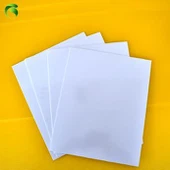
PVC foam board, also known as Chevron board and Andy board, uses polyvinyl chloride (PVC) as the main raw material and adds various additives.
Surface: It can be printed and painted, can be coated or made into various colors, and has the characteristics of flame retardant, moisture proof, acid and alkali resistance, long life, high strength, non-toxicity, strong anti-aging ability and thermoforming.
Appearance: The hand feels elegant and comfortable, and can be nailed, drilled, planed, axe, riveted, glued, etc. It is easy to process and has various processing properties of wood;
Environmental protection: It has far-reaching significance for saving valuable forest resources, saving energy, protecting the ecological environment and promoting the sustainable development of human society.
PVC can be divided into soft PVC and hard PVC. Hard PVC accounts for about 2/3 of the market, and soft PVC accounts for 1/3. Soft PVC is generally used for the surface of floors, ceilings and leather, but because soft PVC contains softener (this is also the difference between soft PVC and hard PVC), it is easy to become brittle and difficult to store, so its scope of use has been limited. Hard PVC does not contain softener, so it has good flexibility, easy to form, is not brittle, non-toxic and non-polluting, and has a long storage time, so it has great development and application value. Hereinafter referred to as PVC. The essence of PVC is a vacuum blister film, which is used for surface packaging of various types of panels. Therefore, it is also called decorative film and adhesive film, and is used in many industries such as building materials, packaging, medicine and so on. The building materials industry accounts for the largest proportion, at 60%, followed by the packaging industry, as well as several other small-scale applications.
In the PVC foam sheet extrusion process, the problems encountered can be basically classified into four categories, one is the stability problem; the second is the melt strength problem; the third is the lubrication problem; the fourth is the dispersion problem. These four types of problems, especially the first three types of problems, will restrict each other and cross-impact. From the perspective of superficial phenomena, it is sometimes difficult to distinguish them immediately. To observe and analyze the analysis, the root cause of the problem can be solved.