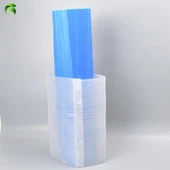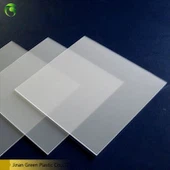
General properties PVC resin is a white or light yellow powder with a relative density of 1.35 - 1.45. The softness and hardness of the product can be adjusted by adding a plasticizer.
Mechanical properties PVC has high hardness and mechanical properties. And it increases with the increase of molecular weight, but decreases with the increase of temperature. The mechanical properties of rigid PVC are good, and its elastic modulus can reach 1500-3000MPa. The soft PVC has an elasticity of 1.5-15 MPa. However, the elongation at break is as high as 200%-450%. The friction of PVC is generally, the static friction factor is 0.4-0.5, and the dynamic friction factor is 0.23.
Thermal properties The thermal stability of PVC is very poor, starting to decompose at 140 ° C, the melting temperature is 160 ° C. PVC has a small coefficient of linear expansion, is flame retardant, and has an oxidation index of up to 45 or more. Therefore, it is necessary to add a heat stabilizer during the processing to ensure the performance of the product.
Electrical properties PVC is a polymer with good electrical properties, but due to its large polarity, electrical insulation is not as good as PP and PE. Dielectric constant, dielectric loss tangent and volume resistivity are large, and corona resistance is not good, generally suitable for medium and low voltage and low frequency insulation materials.
Environmental properties PVC is resistant to most inorganic acids, bases, salts, and most organic solvents. Suitable for medicine, chemical anti-corrosion materials.