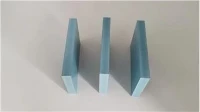
What Are the Advantages of Using Plastic Formwork Instead of Plywood?
Plywood has been one of the most widely used materials in concrete construction for decades. It is relatively easy to cut, assemble, and adapt to different structural shapes, making it a familiar choice for contractors working on walls, columns, beams, and floor slabs.
However, traditional plywood formwork can face several challenges during repeated construction use. Moisture exposure, surface damage, edge swelling, and frequent replacement may increase material consumption and project costs.
As construction companies look for more durable and reusable alternatives, plastic formwork, particularly polypropylene (PP) hollow formwork, is attracting growing attention.
So, what advantages does plastic formwork offer over plywood? Let's examine the key differences and understand when PP plastic formwork may be a better choice.
1. Better Resistance to Water and Moisture
One of the main advantages of PP plastic formwork is its resistance to water.
Plywood is made from bonded wood veneers. Although many construction-grade plywood products use moisture-resistant adhesives or surface coatings, prolonged exposure to water can still affect the material. Repeated wetting and drying may cause swelling, delamination, or deterioration, depending on product quality and site conditions.
PP plastic formwork does not absorb water in the same way as wood. This makes it suitable for construction environments where panels are frequently exposed to rain, wet concrete, and washing operations.
For contractors working on multiple projects, moisture resistance can help reduce problems associated with storing and maintaining formwork materials.
2. Lightweight and Easier to Handle
PP hollow plastic formwork is designed with an internal hollow structure, helping reduce material weight while maintaining practical panel rigidity.
Compared with some plywood panels of similar dimensions and thickness, PP hollow boards may be easier for workers to carry, position, and move around a construction site.
This can be beneficial for projects where formwork is installed and dismantled frequently or where manual handling is preferred.
However, actual weight depends on panel thickness, density, internal structure, and dimensions. Buyers should compare the specifications of the complete panels rather than relying on material names alone.
3. Suitable for Repeated Construction Use
Traditional plywood formwork can gradually deteriorate through repeated cutting, nailing, stripping, and exposure to moisture.
PP plastic formwork is designed for repeated use. Its service life depends on the raw material, manufacturing quality, panel structure, concrete pressure, installation method, and maintenance.
After concrete pouring, panels can generally be cleaned and prepared for another application when they remain in suitable condition.
For contractors handling similar construction projects, reusable plastic panels may help reduce the need to purchase replacement formwork materials for every project.
The actual number of reuse cycles should be evaluated through manufacturer test data and practical site trials rather than assumed from general product descriptions.
4. Easier Cleaning and Maintenance
Cleaning is another important consideration when choosing concrete formwork.
Concrete residue can accumulate on plywood surfaces, especially when the panels are reused repeatedly. Damaged coatings and exposed wood edges may make cleaning more difficult.
PP plastic formwork generally has a non-absorbent plastic surface, allowing concrete residue to be removed more easily after use.
Proper cleaning and storage help maintain the panel condition and prepare it for subsequent construction operations.
For construction companies managing large quantities of formwork, easier maintenance can also simplify material handling between projects.
5. More Consistent Surface Quality
The surface condition of formwork directly affects the appearance of the finished concrete.
Damaged plywood, uneven joints, or deteriorated surface coatings may contribute to inconsistent concrete finishes.
PP plastic formwork provides a manufactured plastic surface that can remain relatively consistent during repeated use when properly maintained.
It can be considered for concrete walls, columns, beams, and other applications where a uniform formwork surface is required.
However, the final concrete finish also depends on panel alignment, joint sealing, release agent application, concrete mix, vibration, and stripping procedures. Plastic formwork alone does not guarantee a perfect concrete surface.
6. Potentially Lower Long-Term Material Costs
The initial purchase price of plastic formwork may be higher than that of some plywood products. However, comparing only the purchase price does not provide a complete picture of the total cost.
Contractors should consider the cost over the entire service life of the formwork.
| Cost Factor | PP Plastic Formwork | Plywood Formwork |
| Initial Purchase | Depends on specifications and manufacturing quality | Varies by grade and thickness |
| Moisture Resistance | High | Depends on plywood grade and surface treatment |
| Cleaning | Generally easier | May require more attention |
| Reuse Potential | Designed for repeated use | Depends on condition and handling |
| Replacement | Depends on service life and damage |
May be needed when panels deteriorate |
| Maintenance | Cleaning and proper storage | Protection against moisture and surface damage |
For projects involving repeated concrete operations, plastic formwork may offer better long-term value if its practical reuse performance offsets the initial investment.
A complete cost comparison should include material purchase, labor, transportation, cleaning, maintenance, storage, and replacement.
7. Helps Reduce Timber Consumption and Construction Waste
Sustainability is becoming an increasingly important consideration in the construction industry.
Traditional plywood formwork relies on wood-based materials and may generate waste when panels become unsuitable for further use.
Reusable PP plastic formwork provides another option for contractors who want to reduce their dependence on disposable timber-based materials.
Polypropylene is also recyclable where suitable collection and processing facilities are available. Actual environmental benefits depend on the product's service life, recycling infrastructure, and end-of-life management.
For companies managing multiple construction projects, extending the useful life of formwork materials can be an important part of reducing construction waste.
8. Where Can PP Plastic Formwork Be Used?
PP hollow plastic formwork can be considered for various concrete construction applications, including:
* Concrete Walls: Panel systems for residential, commercial, and industrial building walls.
* Columns and Beams: Forming rectangular or other designed concrete structural components.
* Floor Slabs: Applications using suitable supporting frames and structural arrangements.
* Foundations: Temporary concrete molds for selected foundation construction projects.
* Repeated Construction Projects: Projects where standardized panel dimensions and reusable materials are beneficial.
The suitability of a specific panel depends on its mechanical properties and the requirements of the complete formwork system.
Plastic panels must be installed with appropriate supports, ties, braces, and accessories. Contractors should verify allowable loads, support spacing, and concrete pressure requirements before use.
9. Plastic Formwork or Plywood: Which One Should You Choose?
Plastic formwork is not necessarily the best choice for every construction project.
Plywood remains useful for projects involving irregular shapes, extensive on-site cutting, or applications where conventional materials are already integrated into the construction process.
PP plastic formwork may be more attractive when contractors prioritize:
* Resistance to water and moisture
* Repeated use across multiple projects
* Easier cleaning after concrete pouring
* Lightweight panel handling
* Reduced dependence on timber formwork
* Long-term material cost management
Before switching materials, contractors should compare product specifications, conduct sample testing, and confirm compatibility with their existing construction methods.
10. Choose PP Hollow Plastic Formwork for Your Construction Projects
Choosing the right formwork material can influence construction efficiency, material consumption, and overall project costs.
For contractors and distributors looking for an alternative to traditional plywood, PP hollow plastic formwork offers a practical solution with moisture resistance, lightweight handling, and reusable panel construction.
SD Green Chemical supplies PP hollow board products for construction and industrial applications. We support inquiries about board dimensions, thickness options, product specifications, and customized supply requirements.
Whether you are evaluating plastic formwork for a new construction project or sourcing products for wholesale distribution, our team can help you identify suitable PP hollow board solutions.
Contact SD Green Chemical to discuss your PP plastic formwork requirements and request product information.